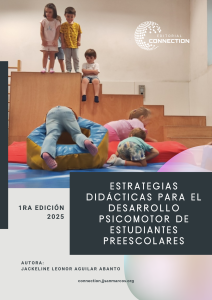
Didactic strategies for the psychomotor development of preschool students
Keywords:
psychomotricity, initial level, preschoolers, strategiesSynopsis
The main objective of the study entitled "Didactic Strategies for the Psychomotor Development of Preschool Students" was to describe the didactic strategies that contribute to the psychomotor development of children in the preschool stage. The purpose was to analyze the psychodynamic phases and strategies applied by teachers, as well as to understand how these strategies integrate the development of fine, gross, cognitive and socio-emotional motor skills in students. We also sought to evaluate the teacher's perception of the influence of didactic strategies on the psychomotor progress of students and describe the strengths and limitations in the implementation of these strategies.
The methodology used was qualitative, descriptive and interpretative, adopting a phenomenological and hermeneutic approach to explore the experiences and perceptions of early childhood education teachers. The in-depth interview technique was used with an intentional selection of 5 teachers with experience in psychomotor skills, which allowed us to obtain significant and contextualized data. The data were analyzed using ATLAS.Ti, uses a coding process to identify emerging categories and patterns of meaning.
The results revealed that didactic strategies focused on play and playful activities are fundamental for psychomotor development, since they favor not only motor skills, but also the emotional and social development of children. However, limitations were also identified, such as the lack of adequate materials and limited time to implement all the necessary activities.
The study concluded that, to strengthen psychomotor development in preschoolers, it is essential to implement comprehensive didactic strategies that not only work on motor skills, but also promote social interaction, problem solving and emotional management. It is recommended to improve the educational infrastructure, increase teacher training and foster interdisciplinary collaboration to ensure more comprehensive attention to the developmental needs of children at this crucial stage.
Downloads